
Where to go on Korčula – part2
Čara
Zavalatica
Smokvica
Blato
Vela Luka
In Čara, next to the parish church of Saint Peter in the middle of the village, grows an old cypress which is protected under Croatian laws for the preservation of nature.
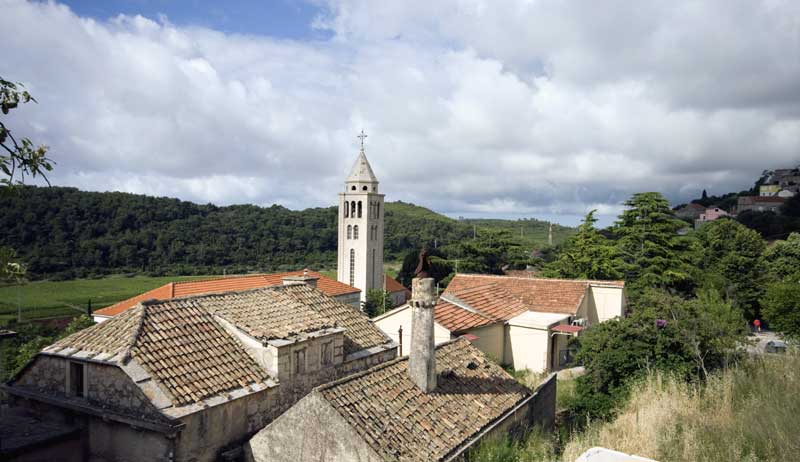 Čara
Čara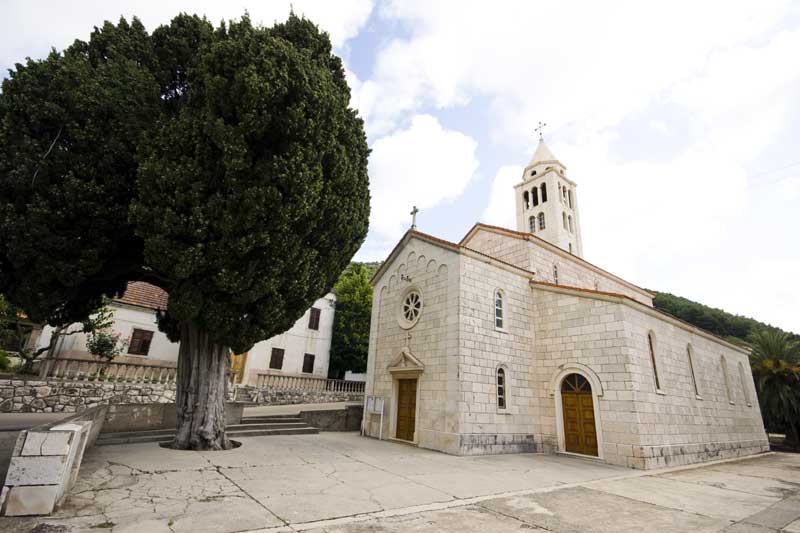 Church of St. Peter
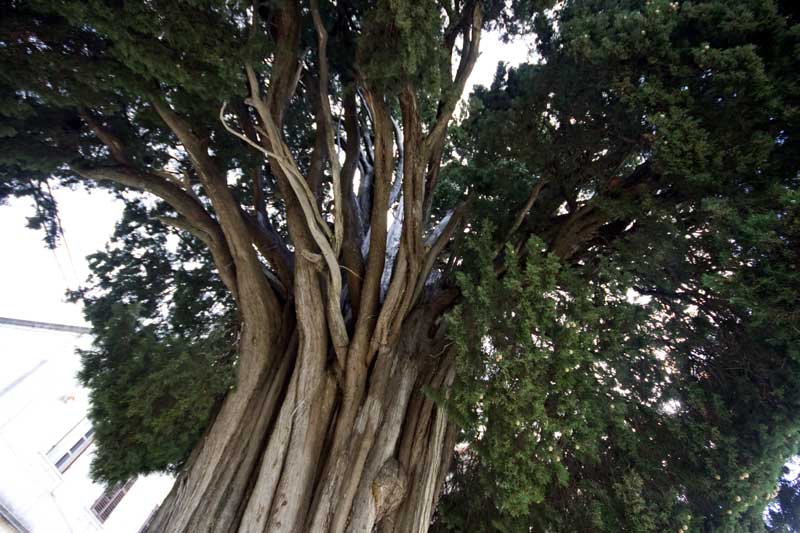 Old cypress
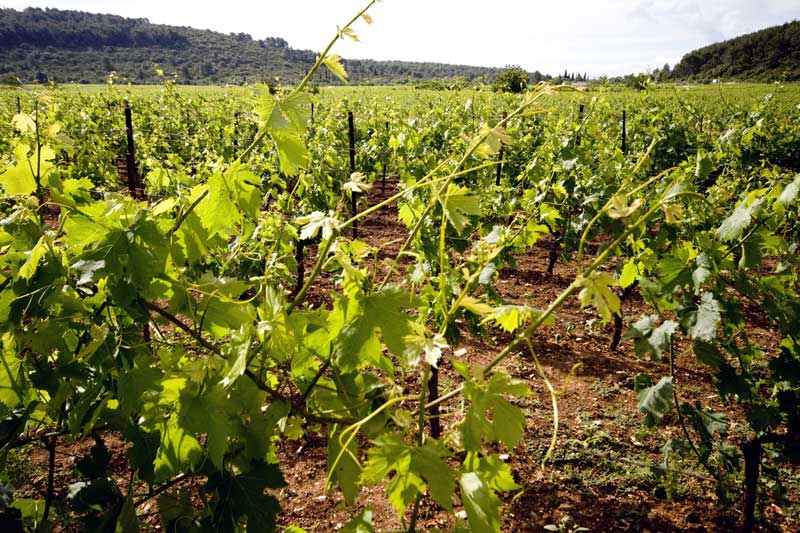 Pošip vineyard
The best known product of Čara, besides extra quality olive oil, is the famous white wine Pošip.
The winery and olive press are situated near the field and wine tasting in one of Čara′s family wineries you should not miss .
BROTHERS ČRNOMIRI
Opposite the parish church of Saint Peter in the middle of the village, on the road, there is a monument to the legendary brothers Črnomiri.
Under the leadership of Petar Črnomir, they offered resistance to the Venetian duke, who was extorting tribute in the 11th century.
The duke captured and executed Petar, but the brothers and the whole village rose up, defeated the duke’s soldiers and killed the duke as an evil-doer.
This legend has survived for centuries and lives still in the minds of peasants from Čara.
KUMPANIJA
Čara has preserved the sword dance Kumpanija, which is performed on July the 25th on the feast of St. Jacob.
The tradition of singing Dalmatian popular folk songs has also been preserved.
Old customs have been preserved in the village, among the best known being the sword battle “Kumpanija” as well as the ancient dances performed by young men and girls.
OUR LADY CHURCH
The Church of Our Lady in the Field lies in the beautiful Field of Čara on the way to the bay of Zavalatica. It was built in 1329 and reconstructed in the 17th century.
Christians from all over the island go on pilgrimage to this church for two Catholic feasts: July 25th, the feast of Saint Jacob the protector of Čara, and for the feast of Mala Gospa, on September 8th. A young shepherdess from Čara had a vision of the Our Lady in the bay of Čavića Luka on July the 25th, 1686.
ZAVALATICA
Not far from Čara, a bay of Zavalatica was developed to export the products in earlier times and today offers quality private accommodation.
Nearby Žitna and Čavića luka pebble beaches are an excellent choice for families.
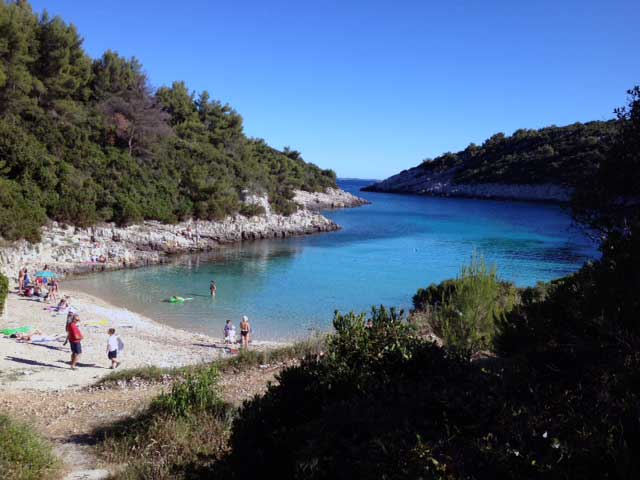 Zavalatica Zitna bay
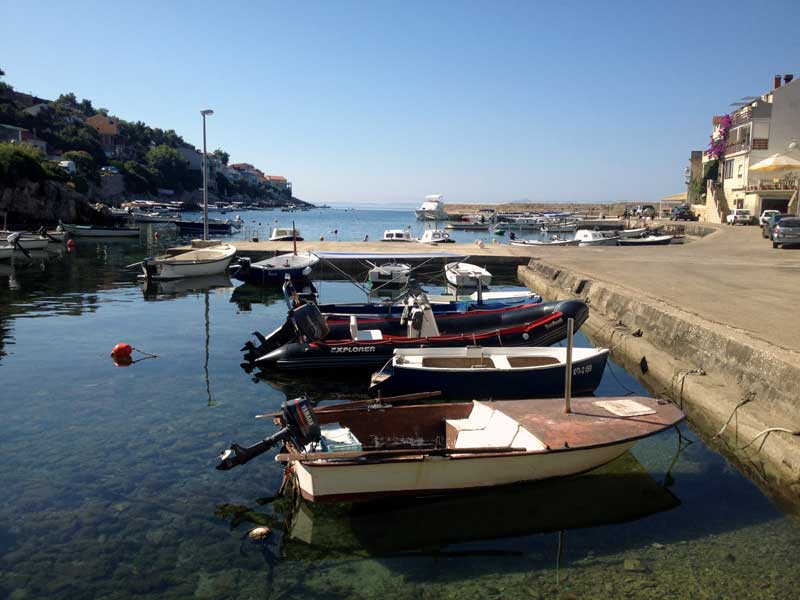 Zavalatica harbour
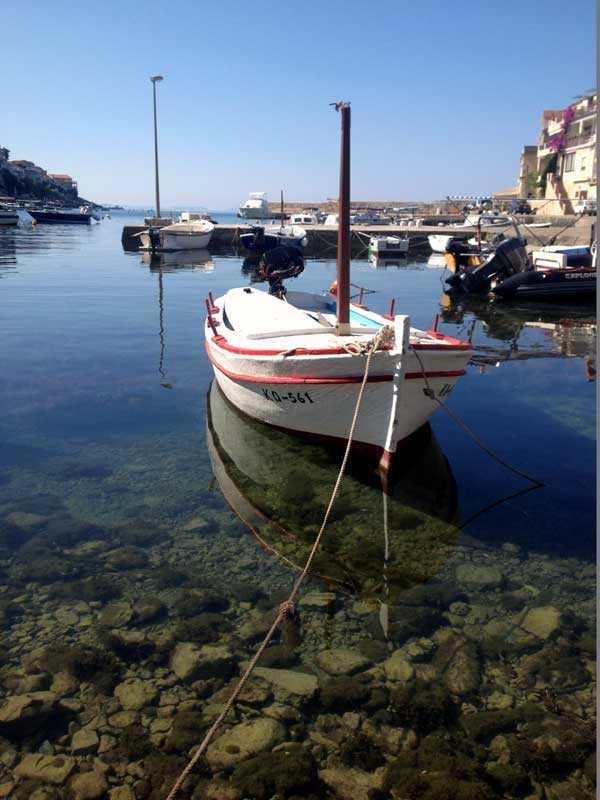 Zavalatica boat
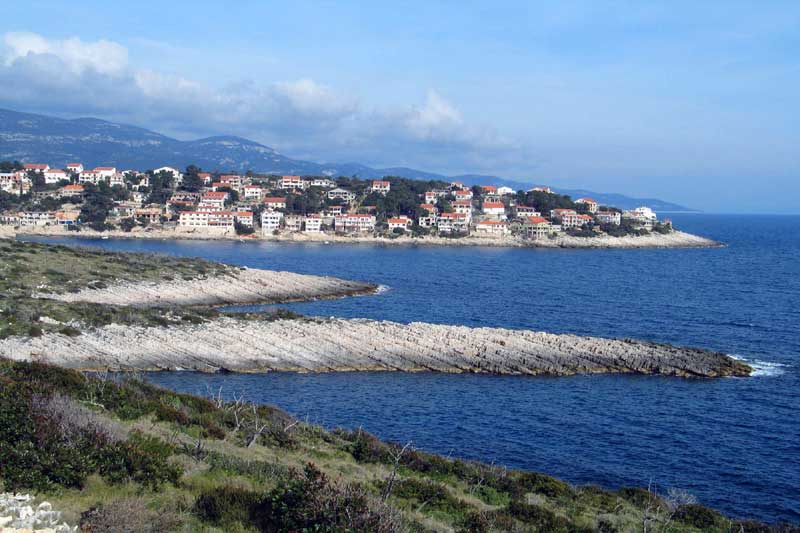 Zavalatica

Smokvica (Italian: Smoquizza) is a village on the island of Korčula and a municipality in the Dubrovnik-Neretva County in Croatia. It has a population of 1,210 (census 2001), in which the absolute majority are Croats (98%). Smokvica is located in the centre of the island of Korčula, about 4 kilometers west of Čara, 13 kilometers east of Blato and 4 kilometers north from Brna. It is known as the birthplace of one of the best-known Croatian wines – Pošip.
The large Neo-Romanesque church of the Purification of Our Lady was designed by Oton Iveković and built in 1920 on the site of an older church which was built in 1666. Beside it is a “loggia”, a baroque building surrounded by columns on all sides. In the village there are several old patrician summer houses, and nearby there are several small early-medieval churches. The Ante Cefera cultural and performing society in the village nurtures the music and local folk dance called Kumpanija.
Smokvica has several fertile fields that are named Krusevo, Prapratna, Stiniva, Banja, Sitnica, Livin Dol and Cipojino polje. The seaside village of Brna is part of the municipality of Smokvica.
Over 70% of the area of the municipality is forested land. About 250 hectares (625 acres) are devoted to vineyards with about two million grape vines. Another 144 hectares (360 acres) are olive orchards with 176,000 olive trees.
The origin of the name Smokvica is not completely understood. It is understood that it might have come from theRoman language Latin, which means pathways. It is also possible that the name could be linked with the presence of water, due to the numerous ponds and lakes in the field of Sitnica in ancient times. Most likely the name has nothing to do with the Mediterranean fruit tree, the fig (Croatian: “smokva”).
Smokvica has been inhabited since ancient times. Numerous remains of ancient ceramics have been found in the area. Mostly old Greek and Roman wine and olive oil vases. There are also remains of ancient Greek villas. In the Korčula Statute [1] from 1214 Smokvica is mentioned (but the earliest dated mention of Smokvica is in 1338). The Korčula Statute recommends on the defense of the old town of Korčula as well as Blato, Smokvica, Čara, Pupnat andŽrnovo. Smokvica along with the island of Korčula was part of the Republic of Venice (1420-1797).
On June 10, 1715, at the crack of dawn, 260 Turkish pirates in two galleys landed at Brna, 3 miles southwest of Smokvica, and carried away 23 residents of Smokvica to be sold as slaves, along with Don Marko Bono from Zrnovo, the parish priest. Don Marko was sold as a slave in Ulcinj for 100 sequins but was later ransomed by his relatives for 141 sequins and returned to Smokvica where he remained until his death in 1745.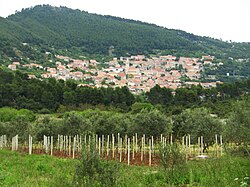
Dinko Tomasic (1902–1975), the first Croatian sociologist, was born in Smokvica. His father Frano Tomasic Dezevic (1854–1926) was the first teacher in Smokvica.
During World War II, the pastor’s house was burned down during a German attack on August 7, 1944, with the loss of the parish archive dating back to 1604. A plaque in Smokvica lists the names of 43 Partisans from Smokvica who were killed in the National Liberation War, along with 16 civilians.

The town was amphitheatrically built on several hills around a small central valley (40 km away from the town of Korčula). A long avenue of lime trees called Zlinje runs through it, along with the towns public buildings (recently built: schools, hotel, bank, shops, municipal building, medical centre etc.). There is a City park that provides exceptional shade during the summer months.
The climate in Blato matches the entire island of Korčula – it is located in the Adriatic which has a Mediterranean climate, characterized by long, quiet, dry and hot summer days with clear, short and mild wet winters. During the entire year the temperatures go below 10 °C in January and February, while June, July, August and September they average above 20 °C. Rainfall is typically Mediterranean, with a peak in late autumn and early winter and a minimum in July.
Blato got its name from its neighbouring field which flooded on regular basis, until 1911. The Blato field was occasionally drained. This created a lake that dried up during summer. The construction of canals and tunnels channelled drainage water into the sea on the north coast. It created conditions for successful exploitation of more fertile land in this region.
The town itself is one of the oldest settlements on the island of Korčula and is situated in the middle of the western part of a field. The area of Blato is believed to have been settled during Roman times. There is a church named “Our Lady of the Field” (Church of Our Lady) located on the Blato Field that has Roman floors that place its beginnings in the 4th century. Archaeological remains of Roman Junianum (agricultural estate) have been discovered.
Also other remains have been found in the local area dating back to prehistoric and Illyrian times.
The worst period in the history of Blato occurred between World War I and World War II, when phylloxera attacked the grape vines, causing them to perish en masse. This greatly contributed to the economic crisis that was happening within the newly formed Yugoslavia. Blato was facing a mass exodus. It was the sixth largest place in Dalmatia, then a region of Austro-Hungary(Blato in 1910 had a population of 7102 ). During 1924 and 1925, obout 890 residents abandoned their homes and left Blato. Whole families immigrated to Australia and Brazil (especially São Paulo. During World War II Blato was bombed by the Allies.
The town is known for a famous sword dance, the Kumpanija, which is performed on April 28, the day of Saint Vincenca, the town’s patron saint, Blato Public library, sanctuary, etno-museum, etc.

Vela Luka
Vela Luka is a small town located on the western side of the island of Korčula at the bottom of a wide bay which has many indented coves. Vela Luka developed at the beginning of the 19th century in a deep sheltered bay. Its name means “big harbour” in Croatian chakavian. Inhabitants of the Island of Korčula and Pelješac often refer to it simply as “Luka” (the port/harbour). It has several hotels and a medical centre called Kalos (for rheumatic disorders and rehabilitation). The inhabitants are farmers, fishermen and workers in tourism. The town has a shipyard called Greben and other smaller industrial plants.
It has an average of over 2500 hours of sunny weather annually, and is the second largest place, in size, on the Adriatic islands. The diversity and richness of the cultural inheritance of Vela Luka can be seen in the exceptional museums and galleries that are located in the Center for Culture in the town center. The Center for Culture is located in the building that was constructed for school needs in the second half of the 19th century, so the building itself has historical significance. It is located near the Parish Church of St. Joseph. Together they create a magnificent urban structure in the typical Mediterranean spirit.
The museum/gallery is decorated with mosaics made in 1968 when the International Artist’s Meeting of Painters was held in Vela Luka.
Vela Luka has many archeological and architectural points of interest. On the south slope of the hill, Pinski Rat, there is an extraordinary archaeological site. It is called Vela Spila (Big Cave)

Vela Spila
and it is one of the most important prehistoric cave dwellings in Europe. Vela Spila provides a picture of life on the Mediterranean of Mesolithic and Neolithic people living in that region. Carbon dating has shown that there was human activity going back 20 000 years. The finds are on display at the Center for Culture in Vela Luka. The cave’s interior measures approximately 1500 sq. meters and it is located several hundred meters above the beautiful Vela Luka Bay. Another panoramic view of the area can been seen from Hum Hill and the Forteca, an Austro-Hungarian fortress built in the 19th century. Vela Luka has a rich history of Klapa singing (an a cappella style). One of the best known is the Klapa Ošjak.
The following is on display in the museum and the gallery:
- The Archeological Collection of finds from the historical locality of the Big Cave and antique finds (ceramic dishes, animal & human bones, antique amphora)
- The International Art Collection of drawings, graphic arts, and smaller statues from local artists (Edo Murtić, Picelj, Ujevic) and foreign artists (Soto, Hayer, Messagier)

- Two sculptures by Henry Moore
- A Collection of ship models by Nedo Gugić
- The Ethnographic Collection of objects from the El Shatt Refugee Camp;
- Folk costumes from Vela Luka.
The island of Korčula is known for its numerous chivalrous dance tournament unions . The tournaments are performed on many different occasions and some incorporate the use of swords. On March 19, 2001 the feast of St. Joseph was celebrated as the day of the community of Vela Luka. This was exactly 75 years after the first celebration of the tournament “Kumpanija”. Thanks to the members of the town’s council, the hardworking and persisting practise of about twenty young men of Vela Luka, the tradition continues today. The FD “Kumpanija” is a celebrated as the day of the community for Vela Luka. Saint Joseph is the patron Saint of the town.
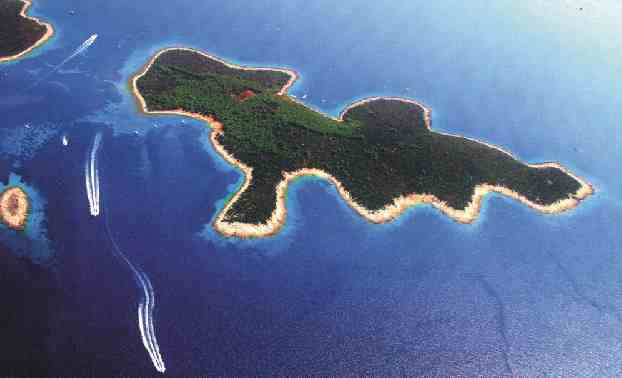 Islet Proizd
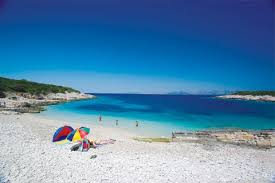 Proizd beach
 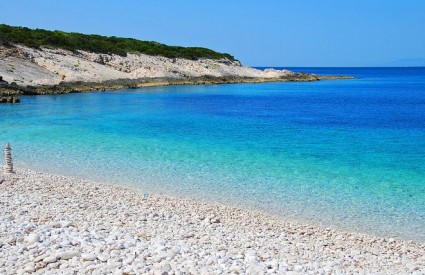 Proizd beach1
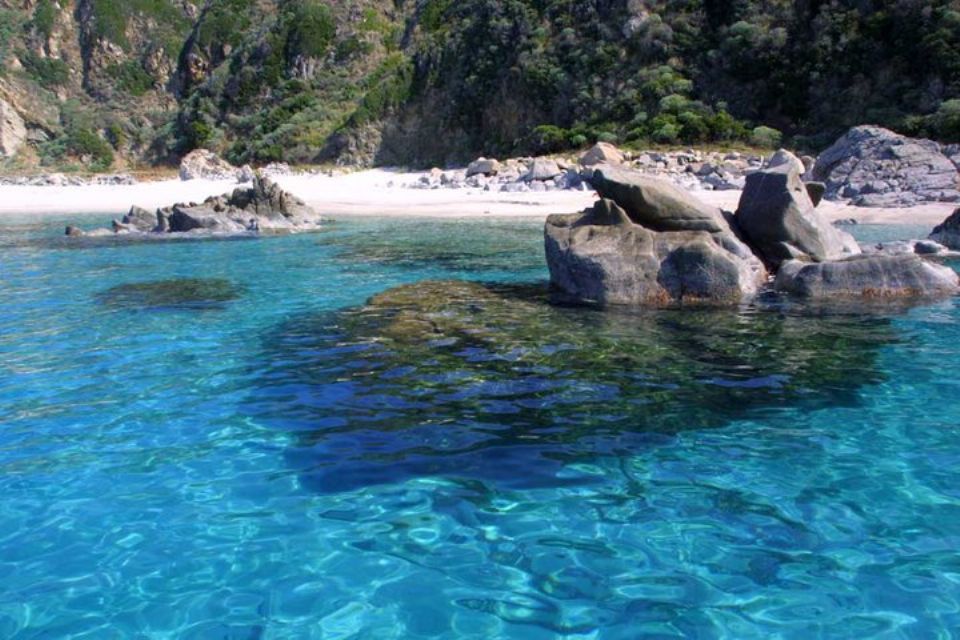 Proizd crystal sea
Vela Luka’s chivalrous dance tournaments festival activity:
- On July 4 there is the international festival of chivalrous dance tournaments in Korcula,
- On September 2 on Sunday there are events in Dubrovnik,
- Chivalrous festival tournament in Madrid-Spain (organize by Consulate of Croatia & town council of Alicante).


About Post Author
